Policy and Records
Records That Stay Useful
Keep infection records that stay useful: cleaning logs, staff briefings, supply notes and reviews, written so a new manager can pick them up later.
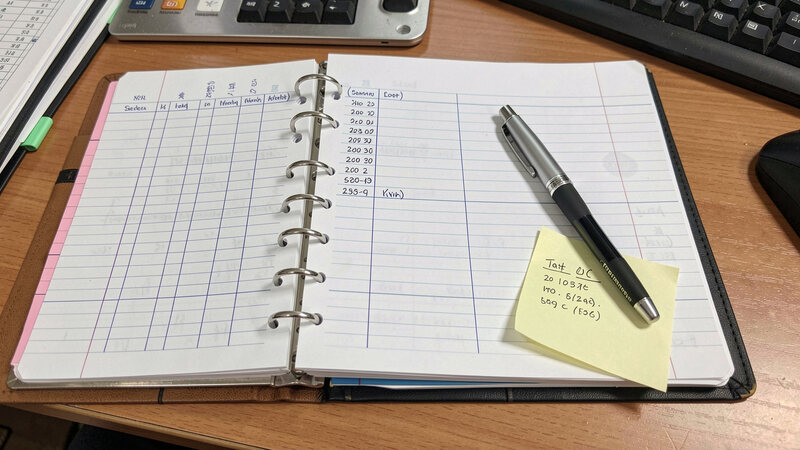
Records have a poor reputation in small businesses, usually because they are built for inspection rather than for use. The records worth keeping are the ones that help you spot a gap, train a new person or answer a question later. This guide sets out which records earn their place, how to write them so a future manager can use them, and how to keep them without creating a burden.
Which records are worth keeping
Four kinds of record do most of the work. A cleaning log shows what was done and when. A supply note shows what was used and what needs reordering. A briefing note shows what the team was told. A review note shows what was changed and why. Everything else, from long checklists to signatures for their own sake, can usually be dropped. If a record never changes a decision, it is not worth the time it takes to fill in.
Write them so a new manager can use them
The test of a good record is whether someone who was not there can understand it. Write the date, the place, who did the work and any note in plain words. Avoid initials without a key and codes that only the current team understands. A short sentence such as "back door handle missed, added to midday round" is worth more than a row of ticks. Records written for the next person stay useful for years.
Cleaning and supply logs
Keep one sheet or one file for the cleaning round, with a column for morning, midday and evening and a line for any note. Keep the supply note alongside it, so a low stock becomes a visible task rather than a surprise. Review both weekly rather than daily, and look for patterns: the same missed point, or the same item running out early, points to a change worth making.
Briefings
A short note of what was discussed at a team meeting, and when, prevents the same conversation from being repeated and helps a new starter catch up. It does not need to be formal. A few lines on the topics covered, the decisions made and who is responsible is enough. Keep briefings in the same place as the plan so they can be read together.
Review notes
When you change something, write down what changed and why, with the date. This is the most valuable record of all, because it captures the reasoning that is otherwise lost. A year later, the note explains why a routine is the way it is, and stops the team from undoing a decision that was made for a good reason. Keep the notes short and in one place.
Retention and privacy
Health information needs care. Keep any staff health note to the minimum the business needs, store it under the lead's control and do not use it in performance decisions. Set a retention period, such as a few months, and dispose of the notes properly when it passes. Say how long records are kept so that staff and customers know where they stand. Cleaning logs and supply notes hold no personal data and can be kept longer without concern.
Keep it small and current
Aim for a handful of short records rather than a filing system. One cleaning and supply sheet, one briefing note per meeting and one page of review notes cover most of what a small business needs. Review the set once a year and remove anything that has stopped being read. The purpose of a record is to help the work, not to prove that the work was done.
Where to keep them
The best place for a record is where the work happens. The cleaning and supply sheet belongs by the cupboard, the briefing note with the plan, and the review notes in the same folder. A record kept in an office drawer is filled in late, if at all. Keep paper where paper works and a shared file where several people need access, but do not split the same record across both, or the two copies will disagree.
Whatever the format, put a date on every page. A record without a date cannot be trusted later, and a page of undated ticks tells the next manager nothing. A date and a short note are enough to make a record useful for years.
What to do with old records
Old records still have a use before they are disposed of. A quick look at a few months of cleaning notes will show whether a gap was a one-off or a pattern, and whether a change you made actually fixed it. Once that review is done, dispose of personal health notes on schedule and keep the rest only while they are still read. A file nobody opens is not a record; it is clutter that makes the useful pages harder to find.
The aim is not to record everything, but to keep the few notes that change a decision. That is what makes a record worth the minute it takes to write.
Start with one sheet
Put a single cleaning and supply sheet by the cupboard today, with columns for the three rounds and a line for notes. Use it for a week and see which parts are actually read. Keep those, drop the rest, and add a short review note whenever you change the routine. That is a record system a small business can keep.
For families preparing a move into a residential care home, the practical questions usually come first: what a normal day looks like, which papers the admission file needs, and what the stay will cost. In France, daily life in such a home covers meals, activities, medical follow-up and help with washing and dressing, while the admission steps involve a visit, a medical file and a signed contract. Costs are set by the establishment, with public support calculated through the APA and the AGGIR dependency scale. A detailed guide to admission records in a care home sets out these points for one residence in Aubenas.
Readers who ask about everyday vitality after forty often start with the same questions: why magnesium is linked to tiredness, how gut health affects energy, and whether hydration and sleep routines matter as much as exercise. German health writing on the subject treats these as connected habits rather than separate fixes, and it sets realistic movement alongside them instead of promising quick results. A useful summary of that approach, covering magnesium and tiredness, gut health, hydration, sleep and shift routines, and movement after forty, is available for readers who want the detail in one place.
Indoor electromagnetic fields are described with a small vocabulary: electrosmog, low-frequency fields from wiring and appliances, and high-frequency fields from wireless devices. Frequencies met daily range from 50 Hz mains supply to 2.4 GHz and higher for Wi-Fi and mobile signals. In Switzerland, the NISV ordinance sets installation limits for these fields, and measurement protocols define how values are recorded at a given spot. For anyone measuring fields in a room, the starting point is the same: name the source, note the frequency, then compare the reading with the applicable limit.
For readers who want a simple way to reset attention during a working day, short breathing breaks at work can be a practical starting point. A complete beginner usually begins with the breath, sitting upright and following each inhale and exhale without forcing the pace. A daily practice can be short: a few minutes in the morning, or between tasks. A first multi-day retreat typically involves silence, scheduled sitting and walking periods, and instruction from a teacher. The guide covers these stages in plain terms for readers in Australia.
Staff who handle common symptoms at work often ask when a problem should be seen rather than monitored. A short set of notes before a consultation can help: it covers common symptoms, the annual check-up and screening, adult vaccination, and the point at which consulting is better than waiting. The same logic applies to workplace health planning. A symptom that persists, a screening test that is overdue, or a vaccination that has lapsed are all reasons to arrange a consultation. Recording these decisions keeps the plan useful after the emergency period ends.
Family constellation work is a group method in which a participant sets up people or objects to represent family members, then reports what shifts in the arrangement. Facilitators read representatives through posture, gaze and stated feelings, and treat those reports as information about the wider system. Critics note the lack of controlled studies, the risk of false memories and the pressure to accept a facilitator's interpretation. Practical warning signs before a seminar include guaranteed cures, no stated fee, and discouragement of questions.
For a United States hospital bill, the detailed statement is the itemised version, not the summary page. It lists each service with its CPT code, the date of service, and the charge. The dates of service matter because they tie a line to a specific visit and to the coverage rules in force at that time. Federal patient rights also apply: you can request an itemised bill, ask for an explanation of any code, and dispute an entry you believe is wrong. A plain guide to reading a detailed hospital bill sets out these parts in order.
For readers who ask how physiotherapy is funded in the Netherlands, the basic insurance package under the Besluit zorgverzekering sets out the conditions it covers, the number of treatments allowed and the fact that no amounts are stated in the regulation itself. The scheme lists covered conditions rather than prices, and treatment duration follows the nature of the condition. A separate guide explains what the basic package covers, including the covered conditions, the treatment duration and the absence of amounts. This matters for anyone comparing cover across policies or planning care after an injury.