Policy and Records
Reading a US Hospital Bill: Codes and Dates
How patients read a US hospital bill: the detailed statement, CPT codes, dates of service, and the federal rights that apply when a charge looks wrong.
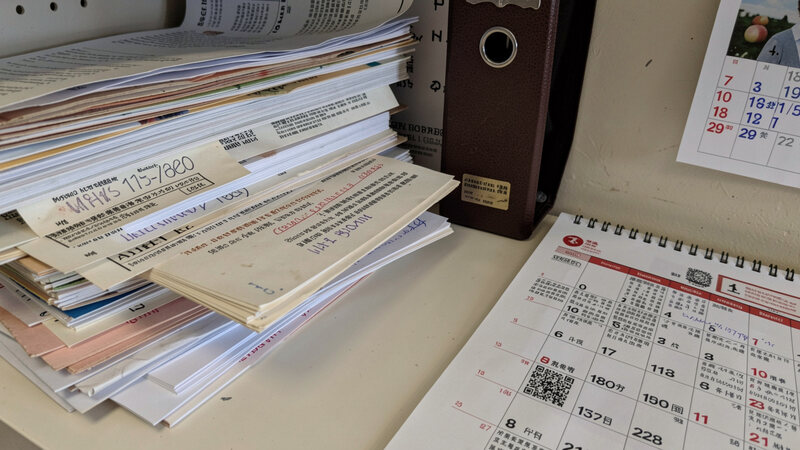
A detailed hospital bill is an itemized statement that lists each service, supply and medication with its code, its date and its price, rather than a single total. To read one, work through it line by line: check that every date of service matches a visit you actually had, look up the CPT codes that do not match what you were told, and compare the total against any estimate you were given before care. Errors such as duplicate charges or codes for services you never received are common enough that reading the statement is worth the time.
If the codes or the layout are unfamiliar, a plain-language guide to the detailed hospital bill can help you match each line to a service before you call the billing office.
What is a detailed hospital bill and how do I read it?
A detailed bill, sometimes called an itemized statement, is different from the summary bill that many hospitals send first. The summary shows a few large categories, such as room and board, pharmacy, laboratory and imaging, with a total for each. The detailed version breaks those categories into individual lines: one line for each blood test, each dose of a drug, each dressing, each scan, each visit by a clinician.
Start with the header. It should carry your name, the hospital's name and address, the account number, the date the statement was issued, and the dates of service covered. If the dates of service are missing, ask for a statement that includes them; without dates you cannot tell which visit a charge belongs to.
Then read the columns. A typical line has a description, a code, a date, a quantity and a charge. The description is written for billing staff, not for patients, so it is often abbreviated. The code is the part that identifies the service precisely. The quantity tells you how many units were billed: two units of a drug, three days of a room, one scan.
Work in passes rather than trying to absorb everything at once. First pass: mark any line whose date does not match a day you were in the hospital or a clinic. Second pass: mark any line that appears twice with the same code and the same date. Third pass: mark any line whose description suggests a service you do not remember receiving, such as a specialist consultation you never had.
Keep a copy of the statement and write your questions directly on it, or in a separate list keyed to the line numbers. When you call the billing office, ask for the person's name and a reference number for the call. If the answer is unclear, ask them to send the correction in writing.
How do I read the CPT codes on my hospital bill?
CPT stands for Current Procedural Terminology. The codes are maintained by the American Medical Association and are used across the United States to describe medical, surgical and diagnostic services. A five-digit CPT code tells the billing system exactly what was done, which is why the same plain description, such as "office visit", can carry several different codes depending on how long the visit lasted and how complex it was.
You do not need to memorize the codes. You need to be able to look up the ones on your bill and compare them with what you were told. A free code lookup is available through the AMA's code search and through many hospital and insurer websites. Type the five digits and read the short description.
Three things are worth checking on each code.
First, does the code describe a service that fits your condition and your visit? A code for a procedure on the left knee, on a bill for a visit about your right shoulder, is a question to raise.
Second, is the code duplicated? The same code on the same date, billed twice, is a common error. Sometimes two units are legitimate, for example two injections, but the quantity column should show that.
Third, is the code for a service that was already included in another charge? Some codes are bundled, meaning one payment covers several related steps. If a hospital bills separately for something that is normally part of a larger procedure, ask whether the codes should have been combined.
Modifier codes can follow the five digits. They add information, such as which side of the body was treated or that a service was repeated. If a modifier looks wrong, ask the billing office to explain it in plain words.
How do I check the dates of service on a hospital bill?
The dates of service are the days on which care was provided. On an inpatient bill they usually run from the admission date to the discharge date, and each line should fall inside that range. On an outpatient bill each line carries its own date.
Compare the dates on the bill with your own records: appointment letters, discharge papers, pharmacy receipts, text messages confirming a visit. Mark any line dated on a day you were not there. A charge dated the day after discharge, or on a weekend when the clinic was closed, is worth a call.
Watch for two patterns. The first is a cluster of charges on a single date that does not match the length of your visit. The second is a charge dated on the day of admission for a service that normally happens later, such as a follow-up test.
Dates also matter for insurance. A claim filed outside the plan's timely filing window can be denied for that reason alone, and the patient may then receive a bill that should have gone to the insurer. If a charge is dated long before the statement was issued, ask whether the claim was filed on time.
What federal rights apply when a charge looks wrong?
The No Surprises Act, which took effect in 2022, protects patients in several situations. It bans most surprise bills for emergency care and for out-of-network care delivered at an in-network facility. It also gives people who are uninsured or who pay cash the right to a good faith estimate before scheduled care, and a way to dispute a bill that is at least 400 dollars above that estimate.
Beyond that law, federal rules give you the right to request an itemized statement, to appeal a denial with your insurer, and to ask for the hospital's financial assistance policy. Nonprofit hospitals are required to have one, and many offer charity care or discounted rates for patients below certain income levels.
If a bill goes to collections, federal rules limit how medical debt can be reported to credit bureaus. The three major credit reporting agencies have also changed how they treat medical collections, and some states add their own protections.
A short routine that saves money
Ask for the itemized statement, not the summary. Read it with a pen. Check the dates first, then the codes, then the quantities. Write down every line you cannot explain. Call the billing office once, with your list, and ask for corrections in writing. If the answer does not resolve the question, ask for the hospital's financial assistance policy and for the insurer's appeal process. Keep every document, including envelopes, because deadlines are often measured from the date on a letter.
None of this requires medical training. It requires a copy of the bill, a quiet hour, and the willingness to ask what each line means.